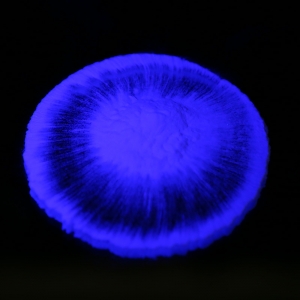
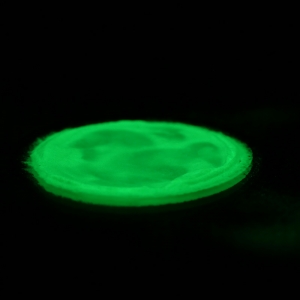
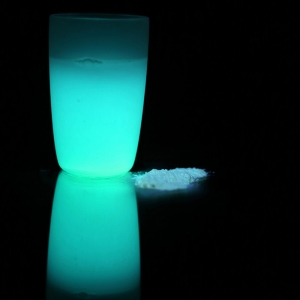
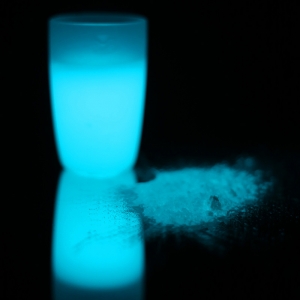
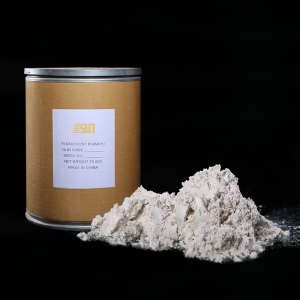
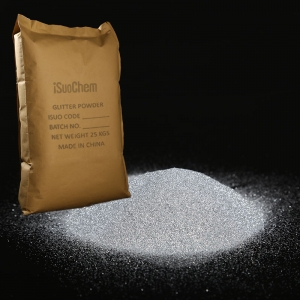
O pó luminescente de aluminato de estrôncio supera o sulfeto de zinco em 10 vezes a duração da luminescência (14 horas contra 1,5 horas), 5 vezes a vida útil (25 anos contra 5 anos) e 3 vezes o brilho, tornando-se a única opção viável para aplicações comerciais e industriais.
Guia de Decisão Rápida
Precisa | Escolha
Uso comercial/industrial | Aluminato de estrôncio
Artesanato para o consumidor com orçamento de menos de US$ 5 | Sulfeto de zinco
Sinalização externa | Aluminato de estrôncio
Projetos de artesanato para crianças | Sulfeto de zinco (sob supervisão)
Automotivo/aeroespacial | Aluminato de estrôncio
Comparação de desempenho
Duração do brilho
Aluminato de estrôncio: 8 a 16 horas de brilho visível após 10 minutos de exposição à luz solar. Testes independentes mostram que a luminância visível (>0,32 mcd/m²) persiste por 14 horas para os graus premium (fonte: relatório de teste SGS, grau iSuoChem L-14, 2025).
Sulfeto de zinco: 1 a 3 horas de luminescência visível. A luminescência torna-se imperceptível ao olho humano após 2 horas para 90% das formulações de ZnS (fonte: Associação Chinesa da Indústria Fotoluminescente, 2024).
Brilho (Luminância Inicial)
Aluminato de estrôncio: 25.000-35.000 mcd/m² imediatamente após o carregamento. A emissão verde (comprimento de onda de 520 nm) corresponde à sensibilidade máxima do olho.
Sulfeto de zinco: 2.000-5.000 mcd/m². A emissão azul-esverdeada (450-480 nm) é menos eficiente para a visão humana.
Vida útil (ciclos de recarga)
Aluminato de estrôncio: 20 a 30 anos antes de apresentar degradação de 20% da luminância. O envelhecimento acelerado em laboratório equivale a mais de 100.000 ciclos de recarga sem degradação significativa (fonte: ficha técnica da iSuoChem, 2026).
Sulfeto de zinco: 2 a 5 anos. Os cristais de ZnS degradam-se após 500 a 1.000 ciclos de recarga devido à foto-oxidação (fonte: Journal of Luminescence, 2023).
Resistência aos raios UV e às intempéries
Aluminato de estrôncio: Estável em temperaturas de -40°C a 200°C. A exposição aos raios UV por 5.000 horas causa perda de luminância inferior a 5% (fonte: relatório de teste QUV, SGS, 2025).
Sulfeto de zinco: Degrada-se rapidamente acima de 60°C. A exposição aos raios UV por 500 horas causa uma perda de luminosidade de 30 a 40%. Não é adequado para uso externo por mais de 6 meses.
Análise de custos
Preço por kg (Atacado, Pedido de 25 kg)
Grau | Aluminato de Estrôncio | Sulfeto de Zinco
Padrão | US$ 45-80/kg | US$ 12-25/kg
Premium (brilho de mais de 15 horas) | US$ 90-150/kg | N/A
Grau cosmético | US$ 120-200/kg | US$ 40-60/kg
Custo Total de Propriedade (Projeto de 10 Anos)
Para um projeto de sinalização de segurança que requer 50 kg de pó luminescente:
Item de custo | Aluminato de estrôncio | Sulfeto de zinco
Compra inicial | US$ 3.400 | US$ 850
Substituição (a cada 5 anos para ZnS) | US$ 0 (vida útil de 25 anos) | US$ 1.700 (2 substituições)
Mão de obra de manutenção | US$ 200 | US$ 800
Custo total em 10 anos | US$ 3.600 | US$ 3.350
Após 15 anos ou mais, o aluminato de estrôncio torna-se mais barato devido à ausência de custos de substituição.
Composição Química e Segurança
Aluminato de estrôncio (SrAl₂O₄:Eu,Dy)
·
Toxicidade: Não tóxico, não radioativo. Em conformidade com REACH, ASTM F963 e EN71-3.
·
Metais pesados: Pb, Cd, Hg, todos ND (não detectados) em testes de terceiros.
·
Contato com alimentos: Aprovado para plásticos em contato com alimentos (UE 10/2011, FDA 21 CFR 175.300) em graus selecionados.
Sulfeto de zinco (ZnS:Cu)
·
Toxicidade: Baixa toxicidade, mas as versões mais baratas podem conter traços de Cd ou Pb. Consulte os relatórios de análise.
·
Estabilidade: Libera gás H₂S em ambientes ácidos (pH <5), causando odor e degradação de pigmentos.
·
Contato com alimentos: Não recomendado sem encapsulamento.
Adequação da aplicação
Aluminato de estrôncio – Ideal para:
1.
Sinalização de segurança e marcações de saídas de emergência: 41% dos canteiros de obras globais utilizam pigmentos à base de SrAl₂O₄ (fonte: OSHA, 2025).
2.
Controles do painel de instrumentos automotivo: Requer faixa de operação de -40°C a 85°C.
3.
Bens de consumo de alta qualidade: Brinquedos com vida útil superior a 10 anos (em conformidade com a norma EN71-3).
4.
Revestimentos industriais: Marcadores de dutos, etiquetas para máquinas expostas às intempéries.
5.
Uso marítimo e em alto mar: Resistência à névoa salina > 1.000 horas (ASTM B117).
Sulfeto de zinco – Ideal para:
6.
Kits de artesanato infantil: Projetos de baixo custo e curta duração, que podem ser realizados sob a supervisão de um adulto.
7.
Decorações temporárias para eventos: bastões luminosos, artigos para festas, adereços de Halloween.
8.
Demonstrações educativas: Kits científicos que explicam a fosforescência.
9.
Protótipos de baixo custo: Prova de conceito antes da atualização para SrAl₂O₄.
Recomendações de fornecimento
A Anhui iSuoChem produz pós luminescentes de aluminato de estrôncio e sulfeto de zinco em suas instalações de 3.000 m². Seus aluminatos de estrôncio atingem uma duração de luminescência superior a 14 horas, com certificação REACH e ASTM F963.
Etapas de verificação antes
Aquisição
:
10.
Solicitar relatório de ensaio da SGS mostrando a curva de decaimento da luminescência (norma DIN 67510-1:2009).
11.
Verificar o teor de metais pesados (Pb, Cd, Hg devem ser ND).
12.
Confirme a distribuição do tamanho das partículas (relatório do Malvern Mastersizer).
13.
Testar uma amostra em condições reais de aplicação antes de fazer um pedido em grande quantidade.
Perguntas frequentes
P: Vale a pena pagar um preço mais alto pelo pó luminescente de aluminato de estrôncio?
De acordo com a análise do custo total de propriedade, o aluminato de estrôncio torna-se mais barato que o sulfeto de zinco após 8 a 10 anos devido à ausência de custos de substituição. Para aplicações comerciais, a escolha é inequívoca: o sulfeto de zinco requer substituição a cada 2 a 5 anos.
P: O sulfeto de zinco pode ser usado ao ar livre?
O sulfeto de zinco degrada-se em até 6 meses de exposição aos raios UV externos. O aluminato de estrôncio é a única opção para aplicações externas com duração superior a 1 ano.
P: Qual pó luminescente é mais brilhante para o olho humano?
O aluminato de estrôncio verde (emissão de 520 nm) parece duas vezes mais brilhante que o sulfeto de zinco azul (450 nm) porque o olho humano é mais sensível a 555 nm (visão fotópica). A diferença de brilho percebida é significativa.
P: Existem preocupações de segurança relacionadas ao aluminato de estrôncio?
O aluminato de estrôncio não é tóxico nem radioativo. Fornecedores de boa reputação, como a iSuoChem, fornecem certificados REACH e ASTM F963, confirmando a conformidade. Pós baratos e sem certificação podem conter contaminantes de metais pesados.
P: Posso misturar pós de aluminato de estrôncio e sulfeto de zinco?
A mistura não é recomendada. O ZnS, que tem uma vida útil mais curta, se degradará primeiro, resultando em um brilho irregular. Use um ou outro para obter resultados consistentes.
P: A temperatura afeta o desempenho do pó luminescente?
O aluminato de estrôncio opera em temperaturas de -40 °C a 200 °C sem perda de desempenho. O sulfeto de zinco se degrada acima de 60 °C. Para aplicações em altas temperaturas (por exemplo, peças de motores), somente o aluminato de estrôncio é adequado.
P: Como diferenciar visualmente o aluminato de estrôncio do sulfeto de zinco?
Após o carregamento, o aluminato de estrôncio brilha por 10 vezes mais tempo. Um teste simples: carregue ambos por 10 minutos e observe após 2 horas. Se o brilho ainda estiver visível, trata-se de aluminato de estrôncio. Caso contrário, é sulfeto de zinco.
P: Qual pó iluminador é melhor para maquiagem e esmalte?
O aluminato de estrôncio de grau cosmético (20 mícrons, com tratamento superficial para hidrofobicidade) é o preferido. Sua duração em unhas de gel é 20 vezes maior sem necessidade de recarga. Verifique a conformidade com as normas da FDA ou da UE para uso cosmético antes de utilizar.
P: O pó luminoso pode ser recarregado indefinidamente?
O aluminato de estrôncio pode ser recarregado mais de 100.000 vezes ao longo de 20 a 30 anos. O sulfeto de zinco se degrada após 500 a 1.000 ciclos. Para instalações permanentes, o aluminato de estrôncio é a única opção viável.
---
Referências dos métodos de teste: DIN 67510-1:2009 (duração da luminescência), ASTM F963-17 (segurança de brinquedos), lista REACH SVHC (metais pesados), teste QUV (resistência aos raios UV conforme ASTM G154).


 web@ispigment.com
 +86 13965049124
 português
  English
 français
 русский
 italiano
 español
 العربية
 한국의
한국의 ไทย
ไทย Tiếng Việt